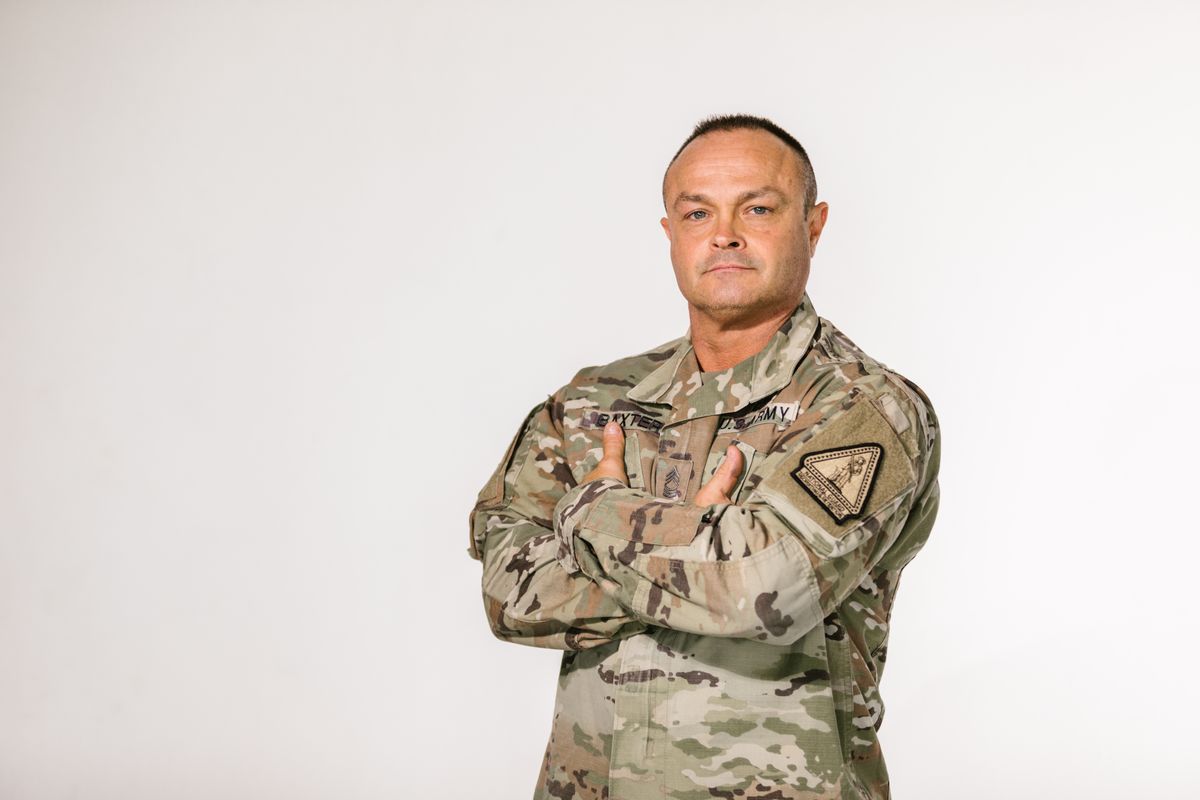
Every year, thousands of people fall victim to romance scams built around a single, powerful fiction: a soldier stationed overseas who has fallen deeply in love with you. The military romance scam is one of the oldest and most effective cons in online dating, precisely because it weaponizes genuine virtues — patriotism, admiration for service, compassion for someone far from home. Understanding how these schemes work, and what the warning signs look like in practice, can protect you from serious financial and emotional harm.
The setup almost always follows a recognizable script. A profile appears — usually on a dating app, social media platform, or even a general messaging service — featuring a photograph of an attractively uniformed person. The images are almost always stolen from a real soldier's public social media account, sometimes an actual high-ranking officer whose photos are easy to find online. The scammer behind the profile is rarely who they claim to be, and they may be operating from anywhere in the world, often coordinating multiple victims simultaneously.
Contact tends to feel immediate and intense. Within days, sometimes hours, the messages become deeply personal. The 'soldier' shares details of a difficult life, children left behind after a spouse's death, a longing for genuine connection after years of sacrifice. This emotional acceleration — sometimes called 'love bombing' — is deliberate. It is designed to build attachment quickly so that when a request for help eventually comes, you already feel a strong sense of obligation and care toward this person.
One of the clearest red flags is the insistence on moving off the original platform as fast as possible. Scammers prefer private messaging apps, personal email, or platforms where conversations leave fewer traces and where photo verification features don't exist. They will often frame this urgency romantically — 'I want to talk to you privately, not through some app' — but the practical reason is that verified platforms make their deception harder to sustain. If someone pushes aggressively to take the conversation elsewhere before you have had any real opportunity to know them, treat it as a warning sign worth taking seriously.
Video calls are almost never offered, and when they are, they tend to be implausible — briefly frozen screens, audio-only connections blamed on poor bandwidth in a remote deployment zone, or pre-recorded clips that do not respond to what you say in real time. The genuine inability to video call is presented as evidence of secrecy requirements or poor infrastructure, both of which sound credible if you have limited knowledge of how military communication actually works. In reality, many deployed service members do have regular access to video calls with family, though connection quality genuinely varies. The point is not that every missed call is suspicious, but that a persistent, total refusal over weeks or months is.
The money request is the pivot point of the whole operation, and it is almost never blunt. Scammers are patient. They will often spend weeks building trust before introducing any financial need. When the request comes, it is typically framed as an emergency beyond the person's control: medical treatment not covered by the military, a fee to access leave and come home to you, legal costs after a false accusation, customs fees to release a package sent to you containing valuables or cash. These scenarios are designed to sound specific and credible. It is worth knowing, as general information, that the U.S. military covers healthcare for active-duty members, that soldiers do not pay fees to take leave, and that no legitimate military process requires a romantic partner to wire money on a soldier's behalf. If any of this is unclear to you, the official websites of military branches and the Department of Defense publish public guidance on what real service members can and cannot request from civilians.
Scammers are also skilled at handling skepticism. If you express doubt, the response will often be hurt, wounded, or quietly disappointed rather than aggressive — 'I thought you trusted me,' or 'I have sacrificed everything and this is how I'm treated.' This emotional manipulation is designed to make your healthy skepticism feel like a personal failing. A real person who cares about you will understand reasonable caution. Guilt as a response to normal questions is itself a red flag.
The photographs used in these scams can often be traced. A reverse image search — available through major search engines by uploading or dragging a photo into the search bar — will frequently reveal that the image belongs to a real person with no connection to your correspondent. Scammers know this, which is why they discourage any activity that might lead you to verify independently. They may even provide fake military ID documents or official-looking paperwork, since forged digital documents require very little skill to produce. None of these materials should be treated as verification in the absence of a genuine, interactive video conversation.
If you have met someone through SafeDate AI, profile verification through government ID and live video selfie matching provides a meaningful layer of protection against impersonation, but no technology eliminates the need for your own judgment. Scammers adapt, and the most sophisticated among them find ways to work around any single safeguard. Staying alert to the behavioral patterns described here matters as much as any platform feature.
If you believe you are talking to a scammer, or if you have already sent money, there are practical steps to take. Stop all contact and do not send further funds. Report the profile on every platform where contact occurred. In the United States, you can report to the Federal Trade Commission and the FBI's Internet Crime Complaint Center, IC3. If you have sent money through a wire transfer or gift cards, contact your bank or card provider immediately — recovery is not guaranteed, but acting quickly improves the odds. This is general guidance; for advice specific to your situation or jurisdiction, a consumer protection agency or financial professional can provide more precise help.
The emotional aftermath of these scams is real and often underestimated. People describe grief that is genuinely comparable to losing a relationship — because in one sense, they have. The person they fell for never existed, but the feelings were real. There is no shame in having been targeted; these operations are professionally run by people who do this full time. What matters now is allowing yourself to process what happened, leaning on people you trust, and, when you feel ready, approaching dating again with clear eyes and the knowledge that recognizing these patterns is something you now carry with you.