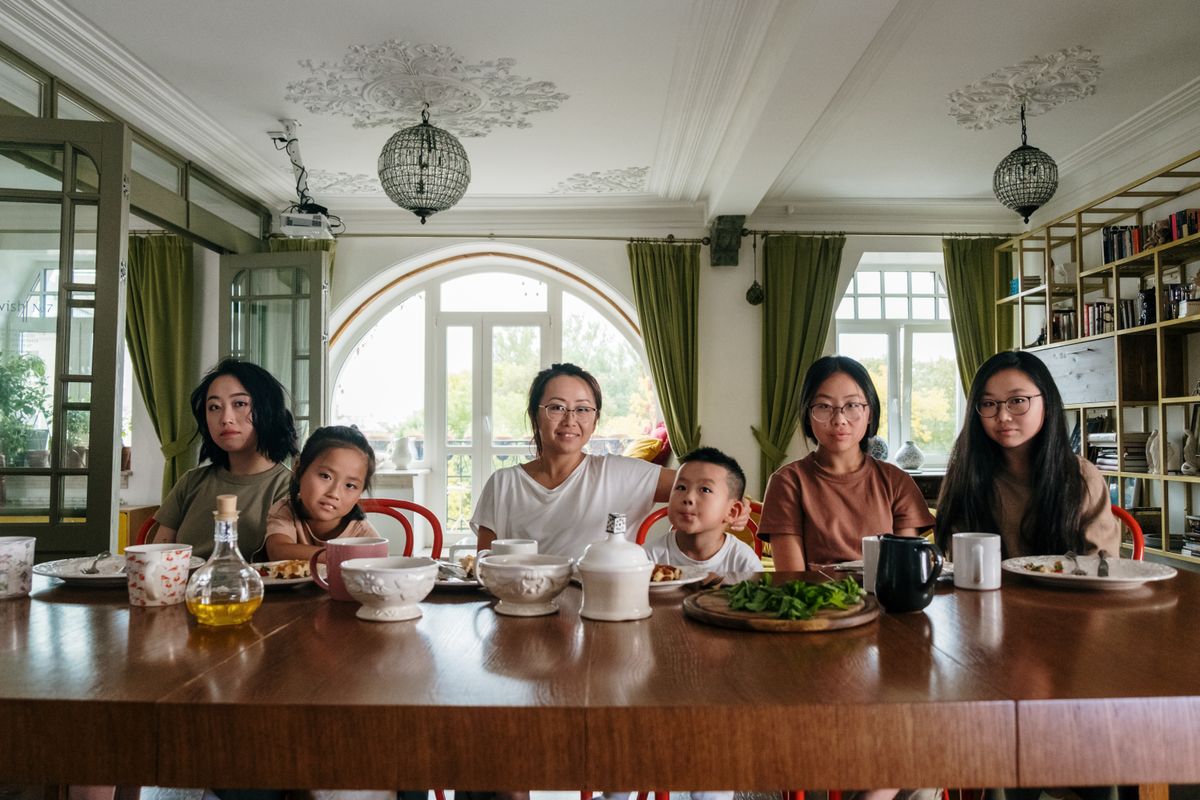
There is a particular kind of joy that comes with falling for someone whose world looks nothing like your own. Different holidays, different food on the table, different ways of saying I love you. But alongside that joy, almost every cross-border couple eventually encounters a quieter, more complicated feeling: the weight of what their families expect, and the question of how two sets of deeply held values can coexist in one relationship.
Family involvement in romantic partnerships varies enormously across cultures. In many parts of South Asia, the Middle East, Latin America, and East Asia, a relationship is not simply between two individuals — it is understood, implicitly or explicitly, as a union between two families. Decisions about who to date, when to meet the parents, and certainly who to marry carry communal significance. In more individualistic cultures, particularly across northern Europe and North America, the prevailing norm places personal happiness and autonomous choice at the center. Neither framework is objectively right, but when two people come from opposite ends of that spectrum, misunderstandings can cut deep.
The first thing worth acknowledging is that cultural expectations are not obstacles to love — they are part of who your partner is. When someone has grown up in a household where the eldest son carries specific family responsibilities, or where a daughter's relationship choices are considered a reflection of the whole family's honor, those are not abstract rules. They are lived realities, often tied to identity, belonging, and love itself. Dismissing them as old-fashioned or controlling, even privately, tends to breed resentment and misses the point entirely.
That said, respecting a partner's cultural background does not mean surrendering your own. Healthy cross-cultural relationships are not about one person assimilating into the other's world. They are built on genuine curiosity, a willingness to explain your own norms without defensiveness, and a shared commitment to crafting something new together. The couple becomes its own small culture, drawing from both sides and consciously choosing what to carry forward.
Practical communication is where this philosophy gets tested. If your partner's parents expect a formal introduction before any serious commitment, discuss well in advance what that meeting will look like, what it signals, and what is or is not being implied. If your own family is skeptical of someone they have never met who lives in another country, give them context without overpromising. Many families come around not through grand persuasion but through gradual familiarity — photographs, video calls, small shared moments that make a distant person feel real.
Language gaps between partners and their respective families add another layer of complexity. Even when romantic partners communicate fluently together, conversations with in-laws can stall on nuance. A phrase that sounds warm and casual in one language may read as overly familiar or even disrespectful when translated directly. If you find yourself navigating these moments, it helps to brief your partner before any family interaction so they can translate not just words but tone and intent. AI-assisted translation tools, like those built into SafeDate AI, can help in written exchanges, but for sensitive family conversations, a bilingual friend or professional interpreter is worth the effort.
Religious differences deserve their own careful attention. Many families who are relaxed about ethnicity draw a firm line at religion, particularly when it comes to raising grandchildren. If you and your partner come from different faith traditions — or if one of you is secular and the other is not — have that conversation early, honestly, and without assuming it will resolve itself. It rarely does on its own. What are your expectations around religious ceremonies, holidays, and children's upbringing? Where are you genuinely flexible, and where are you not? Couples who avoid this topic often find it resurfaces at the worst possible moment, such as during wedding planning or after a baby arrives.
Visa and immigration realities can dramatically shape the timeline and pressure of a cross-cultural relationship. Families who are skeptical of a long-distance partner sometimes soften when they see a concrete, responsible plan. Families who are enthusiastic can inadvertently push a couple toward legal commitments before the relationship is ready. It is worth knowing that immigration pathways — spousal visas, partner visas, fiancé visas — vary significantly by country and change with policy shifts. This is general information, and any couple considering this step should consult an immigration attorney or their country's official government resources for accurate, current guidance.
One of the quieter struggles in cross-border dating is managing the loneliness of feeling caught between two worlds. You may love your partner deeply while also grieving the version of your life your family imagined for you. Your partner may feel they can never fully belong to your family, no matter how hard they try. Naming this grief, for both of you, is not weakness. It is the honest work of building something real. Couples who acknowledge these emotional costs tend to approach problems as a team rather than as adversaries representing opposing camps.
Establishing a united front with families, without being cruel to either side, is one of the most important skills a cross-cultural couple can develop. This means agreeing privately on which family expectations you will honor together, which you will gently decline, and how you will back each other up when challenged. It means resisting the temptation to throw your partner under the bus to keep the peace with your own relatives. And it means giving families time to adjust, because most of them eventually do, especially when they see a relationship that is stable, respectful, and clearly making both people happy.
Platforms like SafeDate AI attract people who are already, by definition, open to looking beyond their immediate geography for a partner — and that openness is a real foundation to build on. But openness alone does not resolve the pressure of a parent who had other plans, a sibling who is suspicious, or a cultural tradition that sees the relationship as a complication. What does help is patience, transparency, and the understanding that you are not just navigating two individuals falling in love. You are negotiating the meeting point of two entire histories. That is hard, meaningful work, and when it goes well, it produces something neither of you could have built alone.